

In your view, what makes a successful evaluation?
A successful evaluation does more than measure outcomes; it shifts understanding, informs action, and strengthens the people and systems it serves. For me, success is defined by usefulness, credibility, and equity in impact. An evaluation should generate insights that stakeholders can act on, reflect the lived realities of diverse participants, and illuminate both strengths and gaps without harm. It must also be methodologically rigorous while remaining accessible. Most importantly, a successful evaluation redistributes voice and power, ensuring that those most affected by programs are not just subjects of study but cocreators of meaning and drivers of change.
What evaluation approaches inform your practice? Do you gravitate more toward quantitative, qualitative, or mixed methods?
My practice is grounded in mixed methods, informed by culturally responsive and equity-centered evaluation frameworks. I see quantitative and qualitative approaches not as competing, but as complementary lenses. Quantitative methods allow me to identify patterns, disparities, and trends at scale, while qualitative approaches surface context, meaning, and lived experience. Together, they provide a fuller, more authentic picture. I am particularly drawn to approaches that center voice, listening sessions, focus groups, interviews, and participatory methods, while integrating robust statistical analyses. This balance enables me to produce insights that are both empirically sound and deeply human.
Why did you become an evaluator?
I became an evaluator because I saw how systems often make decisions about people without truly understanding their stories and experiences. Growing up and being educated in Nigeria and later navigating academic and professional spaces in Botswana, South Africa, and the United States, I experienced firsthand the gaps between intention and reality, especially for those from historically underserved and underrepresented backgrounds. Evaluation, for me, became a tool to bridge that gap. It allows me to ask critical questions, challenge assumptions, and generate evidence that can drive fairness in outcomes. More than a profession, it is a calling to ensure that data is used not just to measure, but to tell stories, uplift, and transform.
How do you build trust with projects you’re evaluating?
I believe trust is built through dialogue, intentionality, transparency, and respect. I begin by listening, seeking to understand the goals, concerns, and contexts of stakeholders before introducing any framework or method. I am clear about the purpose of the evaluation, how data will be used, respectfully negotiating rules of engagement, embracing shared values, and making visible what participants can expect. I also prioritize reciprocity, ensuring that those who contribute their time and perspectives see value in return, whether through shared findings, actionable recommendations, or space for reflection. Consistency matters as well; showing up, following through, and honoring commitments are essential to building credibility and sustaining trust.
Share a memorable adventure or travel experience you’ve had.
One of my most defining journeys has been not a single trip but a progression, beginning in Ile-Ife, Osun State in southwestern Nigeria, where I was born and raised, extending through formative lived experiences in southern Africa, and evolving into building a personal and professional life in the United States. Each transition called me to navigate new cultural, academic, and professional landscapes while staying grounded in my identity, my sense of purpose, and my Yoruba philosophical worldview of Ọmọlúàbí, a guiding ethic grounded in integrity, respect, responsibility, and character. All these experiences were both wide-ranging and transformative. They taught me how to adapt without losing my center, to listen with intention, and to recognize difference as a powerful asset rather than a barrier. Today, they shape how I approach evaluation, reminding me that behind every dataset are real people, layered stories, and untapped potential waiting to be understood, respected, and elevated.
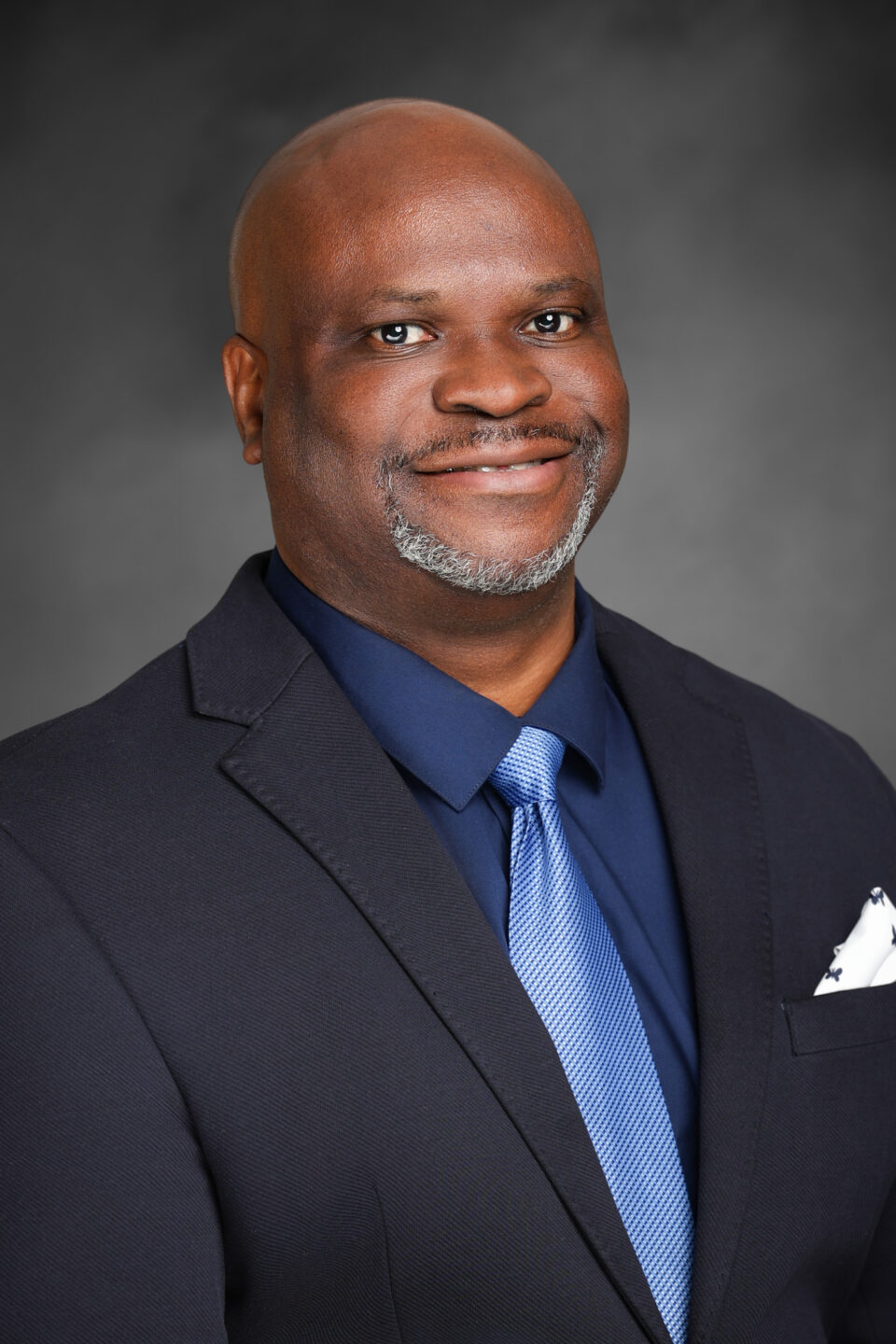
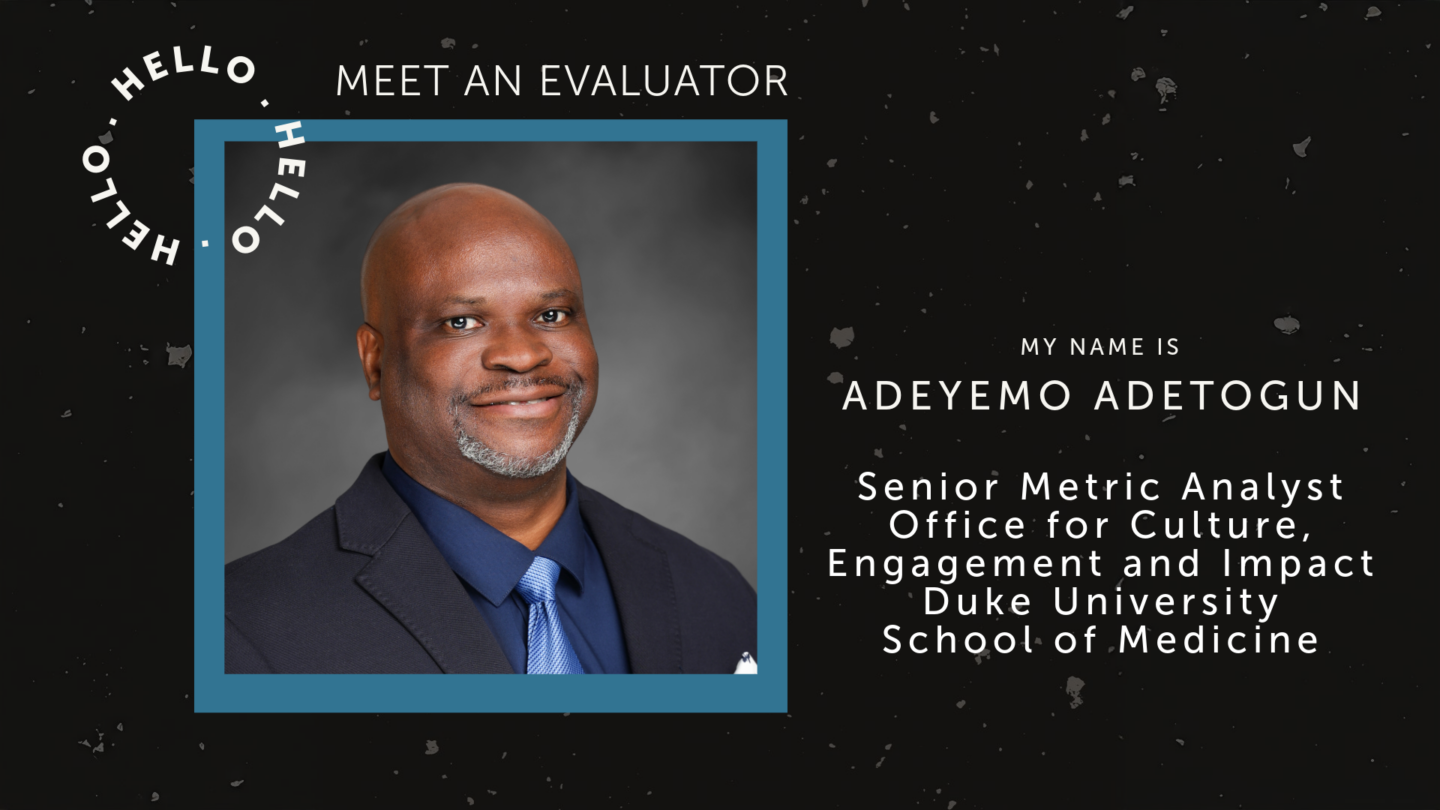
Adeyemo Adetogun, Ph.D.
Senior Metric Analyst, Office for Culture, Engagement, and Impact, at Duke University School of MedicineAdeyemo Adetogun, PhD, is a senior metric analyst in the Office for Culture, Engagement, and Impact at Duke University School of Medicine, where he advances data-driven strategies to build inclusive, high-performing ecosystems in STEM and health education. With a multidisciplinary background in science and technology, research and evaluation, and equity-centered practice, his work bridges rigorous analytics with lived experience and storytelling, amplifying the voices of all stakeholders, particularly women, first-generation scholars, international students, student identity and employee resource groups, and differently abled learners. Adeyemo specializes in translating complex data into actionable insights that drive cultural transformation, belonging, and measurable impact. His scholarship and practice center on reimagining evaluation as a tool for justice, access, inclusive excellence, and institutional accountability. Through his work with leadership in organizations, he challenges systems to move beyond intention toward sustained, evidence-based change, ensuring that all learners and professionals not only persist but thrive.

Except where noted, all content on this website is licensed under a Creative Commons Attribution-NonCommercial-ShareAlike 4.0 International License.



 EvaluATE is supported by the National Science Foundation under grant number 2332143. Any opinions, findings, and conclusions or recommendations expressed on this site are those of the authors and do not necessarily reflect the views of the National Science Foundation.