


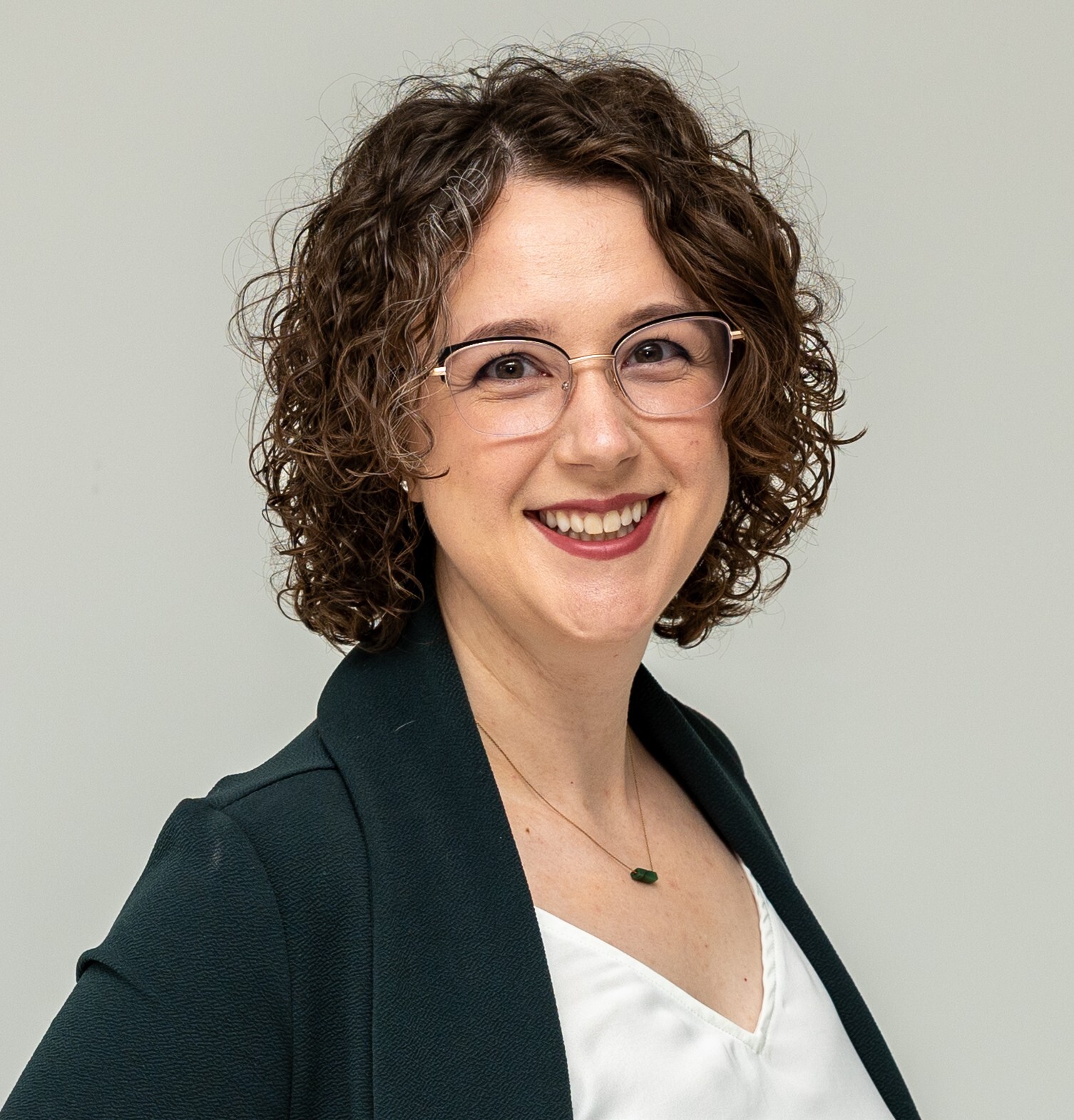
About the Evaluator
Emily Royse holds a PhD in biology education from the University of Northern Colorado, where her dissertation examined science identity and transformative experiences in undergraduate education. She spent eight years teaching college biology and anatomy & physiology courses, including serving as a primary instructor at Aims Community College and Laramie County Community College. As a postdoctoral researcher on an NSF IUSE-EHR grant, she helped develop a next-generation concept inventory for undergraduate environmental science students, scored using machine learning. She then spent a year and a half writing pre-award evaluation plans and logic models for NSF, Department of Education, and HHS grant proposals. Her niche is preparing biomedical and biological lab technicians, and she approaches evaluation with the view that every project exists within an ecosystem of students, educators, and employers. Impact emerges from synthesizing the experiences of the project’s multiple shareholders.
Evaluation Background
I specialize in...
- Qualitative methods
- Quantitative methods
- Mixed methods
- Developmental evaluation
- Theory-driven evaluation
I have worked with projects in the areas of:
- ATE projects
- NSF projects other than ATE (e.g., IUSE, S-STEM, AISL, HSI, ADVANCE)
- Projects at two-year colleges
- STEM education projects supported by funder other than NSF
Training and Certifications
- Professional development workshops
- Webinars
- Online courses on evaluation
Outside of Work, I enjoy...
…tabletop game design, learning to play the cello, and listening to my very old-man-dog snore while I read.
A Successful Evaluation...
…acknowledges complexity that was not initially captured in the logic model. Defining scope keeps an evaluation focused, but naming emergent outcomes is what makes an evaluation transformative rather than merely compliant.
My Working Style...
…centers on building shared understanding: I listen for a team’s vision and bring my expertise to sharpen it. I work remotely, including site visits, but travel in person when that’s the better fit. Regular check-ins keep us in sync.
 EvaluATE is supported by the National Science Foundation under grant number 2332143. Any opinions, findings, and conclusions or recommendations expressed on this site are those of the authors and do not necessarily reflect the views of the National Science Foundation.