

Q: In your view, what makes a successful evaluation?
A successful evaluation is culturally responsive, inclusive, and rooted in genuine collaboration with the communities it serves. As a Black woman and HBCU graduate, I prioritize participatory evaluation to ensure that diverse voices—especially those historically marginalized—are heard, respected, and centered. Success means more than collecting data
It involves building trust, co-creating meaning, and delivering findings that are actionable and relevant. I believe evaluations should empower communities, reflect their lived experiences, and ultimately lead to equitable and sustainable change. By embedding cultural humility into every step, I strive to make evaluations both impactful and transformative.
Q: Why did you become an evaluator?
I became an evaluator because I’m passionate about using data and research to drive meaningful, equitable change—especially in communities that have historically been overlooked or underserved. As a Black woman and HBCU graduate, I saw firsthand the importance of culturally responsive practices and the power of inclusive, community-centered work. Evaluation allows me to combine my love for education, research, and advocacy to amplify voices, uncover truths, and inform action. It’s not just about measuring impact; it’s about making sure the work truly serves those it’s meant to help—and doing so with care, context, and cultural awareness.
Q: How do you build trust with projects you’re evaluating?
I build trust by being present, consistent, and approachable. I take time to learn the unique culture and context of each project, showing stakeholders that I’m not just an outsider collecting data, but a partner invested in their success. I’m mindful of power dynamics and work to create spaces where people feel comfortable sharing honestly. Small actions—like actively listening, honoring people’s time, and following through on commitments—go a long way. I also prioritize clarity around expectations and processes so everyone knows what to expect. Trust, for me, starts with respect and is maintained through accountability.
Q: What’s your favorite pastime or hobby?
One of my favorite pastimes is working with the marching band at my alma mater, North Carolina Central University. As a former cymbal player and section leader, being part of that band was one of the most formative experiences of my college journey. Now, giving back as a mentor and supporter allows me to stay connected to that legacy, support current students, and celebrate the culture and community that shaped me. It’s more than music—it’s about discipline, teamwork, and tradition. Supporting the band reminds me of the power of HBCU pride, creativity, and resilience.
Q: Share a memorable adventure or travel experience you’ve had.
One of my most memorable travel experiences was a week-long immersive trip to Rome, Italy and Paris, France. I had planned to visit London as well, but due to post-COVID border restrictions between the UK and EU, we had to adjust our plans. Despite that, the trip was unforgettable—rich with culture, history, and beauty. From exploring the Colosseum and Vatican City to seeing the Eiffel tower sparkle at night, every moment felt like a dream. It was an inspiring reminder of how travel can broaden your perspective, deepen your appreciation for different cultures, and create lifelong memories.

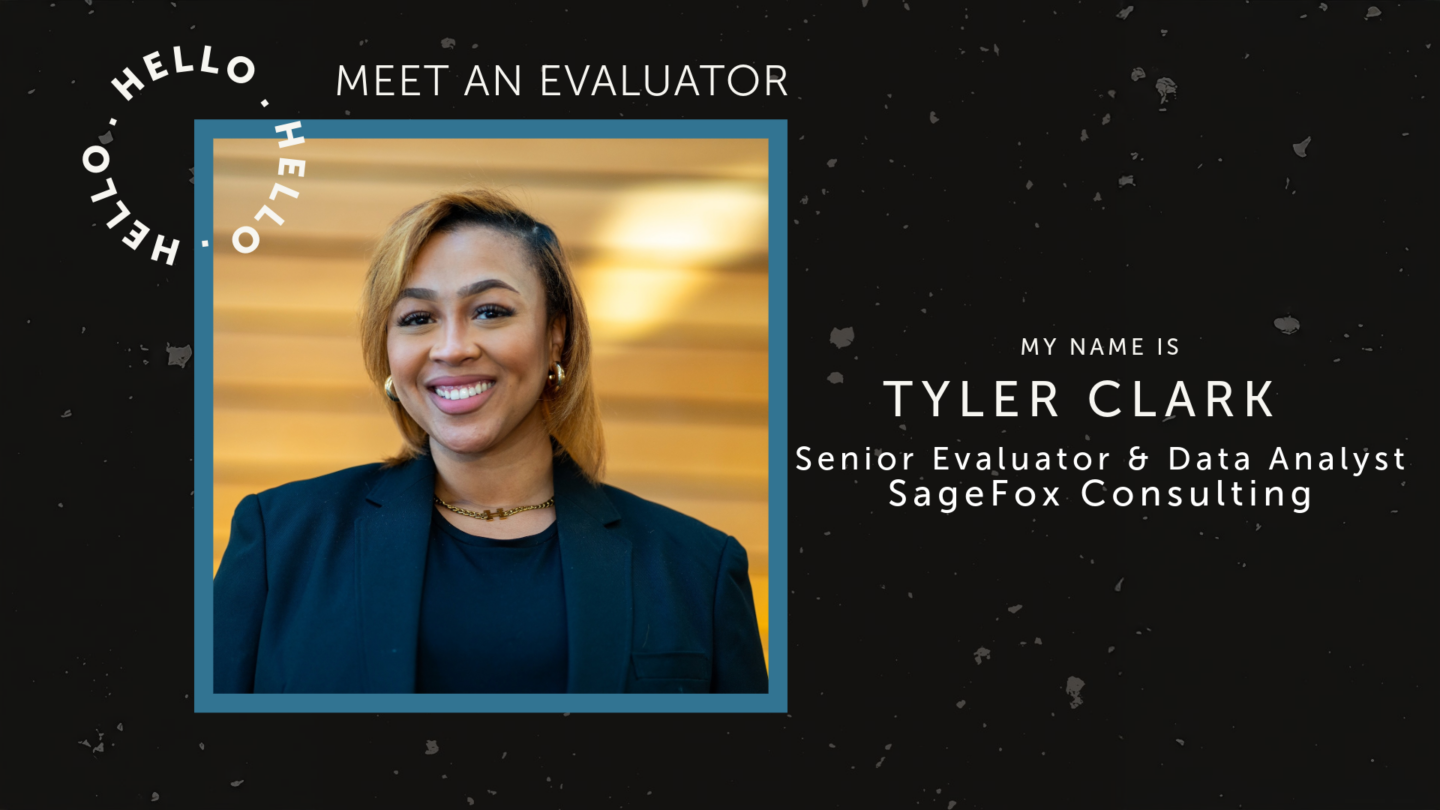
Tyler Clark
Senior Evaluator and Data AnalystDr. Tyler Clark, a senior evaluator and data analyst, joined SageFox in 2023, bringing over a decade of experience in education, research, and evaluation. With 7 years in research, 5 in evaluation, and 11 in education—including higher ed teaching roles at NCCU, NC A&T, and Saint Augustine’s—she specializes in STEM education and has contributed to major DoD, NSF, and NIH-funded projects. Dr. Clark holds a PhD in educational research, measurement, and evaluation from UNC Greensboro, along with an MS, BS (criminal justice), and BA (psychology) from NCCU. Passionate about empowering others, in 2018 she founded J.E.W.E.L.S., Inc., a nonprofit supporting future women leaders, now active on three North Carolina campuses (NCCU, NC A&T, and UNC Charlotte ). Dr. Clark is deeply committed to social impact, educational equity, and fostering academic growth through research and mentorship.

Except where noted, all content on this website is licensed under a Creative Commons Attribution-NonCommercial-ShareAlike 4.0 International License.



 EvaluATE is supported by the National Science Foundation under grant number 2332143. Any opinions, findings, and conclusions or recommendations expressed on this site are those of the authors and do not necessarily reflect the views of the National Science Foundation.