

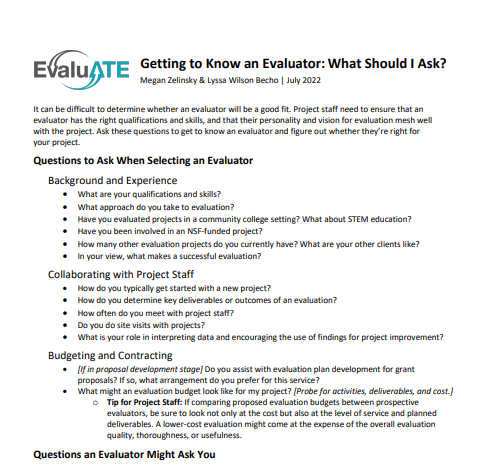
Getting to Know an Evaluator: What Should I Ask?
Ask these questions to get to know an evaluator and figure out whether they're the right fit for your project.
View Getting to Know an Evaluator Guide
You should start working with an evaluator as soon as you are able. For some, this will be in the proposal stage, when you’re still developing the details of your activities and identifying your project goals. For others, this will be when you receive word of your NSF funding. Whether you can work with an evaluator in the pre-award stage depends on how your institution handles the procurement process. Each state and institution has differing policies on when and how independent contractors can be hired. This includes evaluators.

There are several ways to find an evaluator who fits your project. Ask colleagues and other ATE projects for recommendations, or explore evaluator directories such as EvaluATE’s evaluator directory, ATE Central’s evaluator map, and the American Evaluation Association’s directory.
There is no NSF-approved evaluator list. NSF requires that your evaluator be independent of the project. This means the person serving as the independent evaluator can’t have another line on the project’s budget, they can’t be in the professional reporting structure of anyone on the project (e.g., they’re the PI’s boss or the PI is their boss), and they are located in a different institutional department or unit.
In the United States, there is no official certification or credential that makes someone an evaluator. However, there are academic degree programs that offer specialized training in evaluation and professional guidelines that inform the practice of evaluation, such as the American Evaluation Association’s Evaluator Competencies and the Joint Committee on Standards for Educational Evaluation.
Look for an evaluator whose experience and approach align with your project’s needs. Consider questions such as:
The right evaluator doesn’t necessarily need to be an expert in your specific STEM field or in two-year colleges.
What matters most is finding someone who can understand your context, bring appropriate evaluation expertise, and work collaboratively with your team.

Your evaluator should be part of your project throughout your grant, but sometimes circumstances change. NSF allows you to change evaluators if needed.
Make sure to notify your NSF program officer of the change in evaluator and share the new evaluator’s biosketch.
The evaluation section of your ATE proposal provides a roadmap for how you will examine your project’s progress, outcomes, and impact throughout the grant. A strong evaluation plan connects your evaluation questions to your project goals and describes how you will gather and use information to learn from your work.
Your evaluation plan is a starting point, not a promise that everything will stay the same. Once your project is funded and implementation begins, you and your evaluator may refine your evaluation questions, methods, or data collection strategies as you learn more about your project and its context.
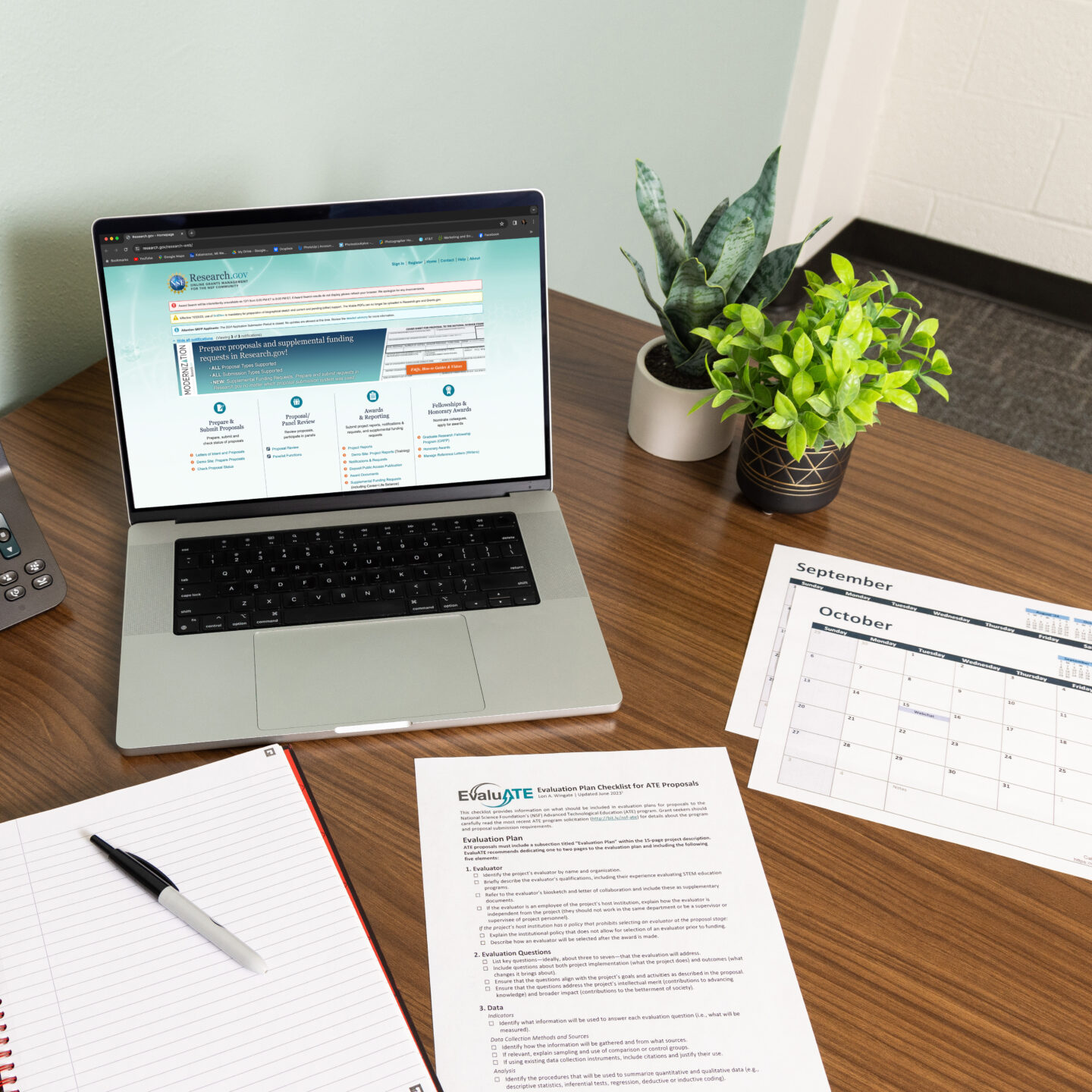
If you haven’t already connected with an evaluator, finding and engaging an evaluator should be one of your first steps. Your evaluator can help you revisit the evaluation plan from your proposal and determine what questions, data, and approaches will best support your project.
If you have already identified an evaluator or worked with someone in the pre-award stage, make sure to notify them of your award as soon as possible. You can then begin to get the evaluation contract with your institution in place so the evaluator can begin working with you. For more details and next steps, review our getting started checklist to walk through the first steps of working together and identify what to do and who should be involved along the way.
Ask these questions to get to know an evaluator and figure out whether they're the right fit for your project.
View Getting to Know an Evaluator Guide
Many ATE PIs and project staff new to working with external evaluators may wonder what working with an evaluator looks like. This blog shares four key takeaways to help you get started.
Read Working with an Evaluator blog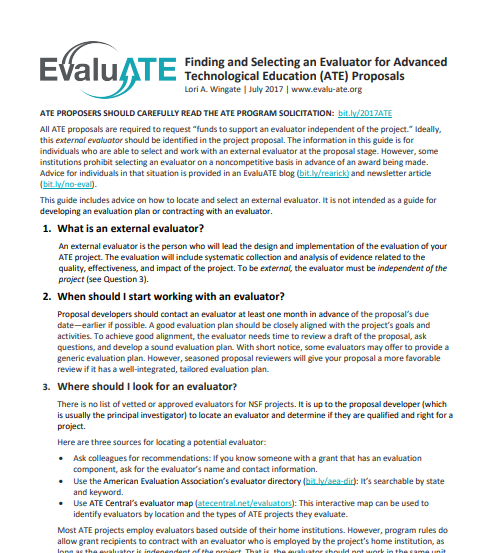
The information in this guide is for individuals who are able to select and work with an external evaluator at the proposal stage, including advice on locating and selecting an external evaluator.
View Finding and Selecting Evaluator Guide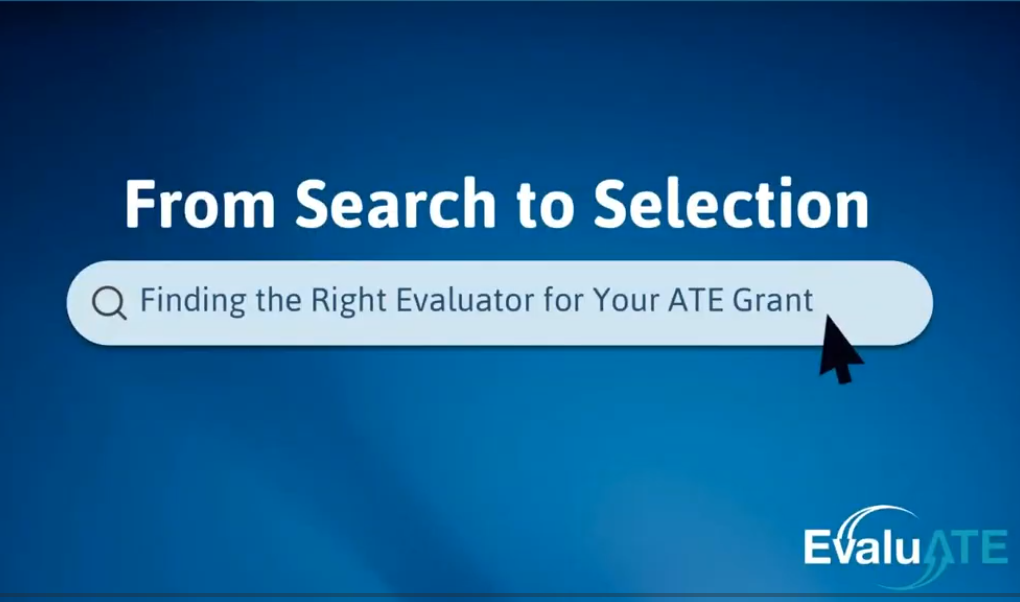
This webinar offers a practical framework to guide every step of your search for an evaluator.
View Search to Selection Webinar
This blog offers practical tips to help you build a relationship with your external evaluator.
Read blog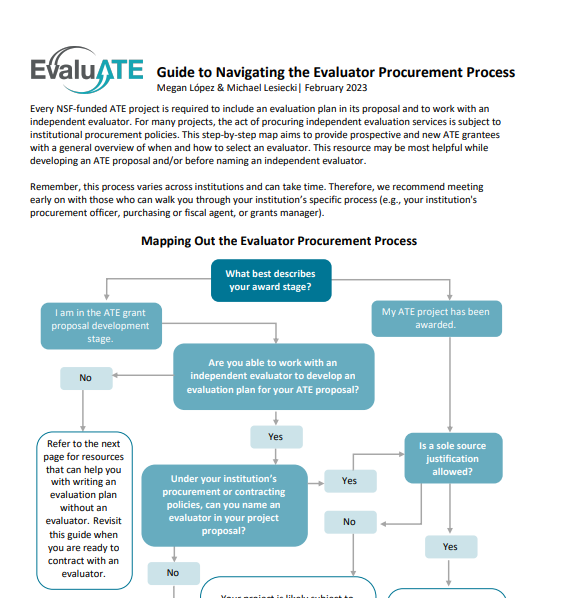
This guide can help you identify where to start and who to ask about your institution's steps involved in hiring an evaluator.
View Procurement Guide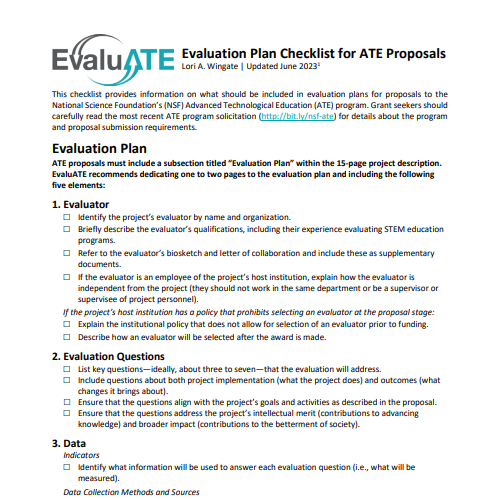
This checklist provides information on what should be included in evaluation plans for NSF ATE proposals.
Review Evaluation Plan Checklist
This webinar will provide a road map to help you avoid common mistakes when writing your ATE evaluation plan.
View Webinar Slides
This webinar explores practical strategies for writing evaluation questions, identifying evaluation indicators, and more.
View Webinar
This checklist aids in developing effective and appropriate evaluation questions.
View Checklist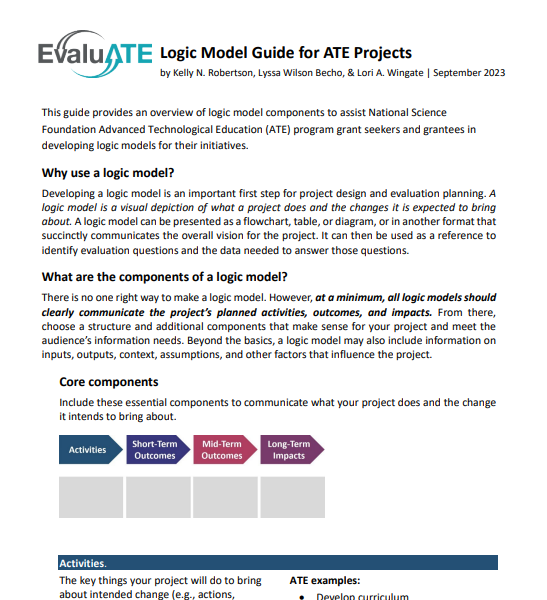
This guide provides an overview of logic model components for NSF ATE program grant seekers and grantees.
View Logic Model Guide EvaluATE is supported by the National Science Foundation under grant number 2332143. Any opinions, findings, and conclusions or recommendations expressed on this site are those of the authors and do not necessarily reflect the views of the National Science Foundation.