




What is evaluation?

Evaluation helps project teams understand what’s working, what could be improved, and what difference their project is making. It is a systematic process of gathering and making sense of information to answer important questions about a project and support learning and improvement. Effective evaluations engage interest holders; balance questions about process and outcomes; and respond to context.

Okay, but what does that mean?

It means that evaluation provides you with meaningful and valuable information that answers questions and supports your work through research-based methods and strategies for collecting and analyzing data (for example, surveys, observations, interviews, and evaluation approaches). High-quality evaluation balances usefulness, feasibility, propriety, accuracy, and accountability.

Why you need to evaluate your ATE project

Evaluation serves three main purposes:

icon showing raising bar graphs with upwards arrow

1. Improvement and decision making

Evaluation is about learning what works and what doesn’t, to improve your project, better serve your students, and fulfill industry needs in your community. Evaluation should help inform your decisions throughout your grant, from what to do more of, what to change, and how to proceed.

icon showing a report with a checkmark

2. Accountability

NSF requires an independent evaluation as a condition of your ATE grant. These evaluations help NSF demonstrate responsible use of federal funds to Congress.

icon magnifying glass with checkmark in the middle

3. Evidence

Your evaluation generates evidence of what works, contributing to the broader technician education field. You’ll also need this evidence for future NSF proposals. The “Results from Prior NSF Support” section requires specific outcomes and metrics, drawn directly from your evaluation.

Evaluation helps you improve your project, meet NSF requirements, and build evidence for what’s next.

Evaluation for Formative and Summative Purposes

You may hear evaluation talked about as “formative” or “summative.” These are not specific evaluation approaches but ways to describe the purposes of evaluation. ATE project evaluations typically involve both formative and summative work.

Whether formative or summative, evaluation helps move beyond “What happened?” to “What does this mean for our project, and what should we do next?”

Evaluation for Formative Purposes

Helps you improve along the way. It looks at how a project is being implemented and what can be adjusted as the work unfolds.

Evaluation for Summative Purposes

Helps you understand what happened and what difference it made. It looks at outcomes, impact, and the extent to which project goals were achieved.

What evaluation can do for your project

Evaluation has the power to help you:

  • See how your project is progressing toward its goals.
  • Identify what’s working well and where adjustments may be needed.
  • Find opportunities to troubleshoot, improve, or sustain your work.
  • Gather information to share with partners, colleagues, and institutional leaders.
  • Use evidence to inform decisions about your project.

At the end of the day, evaluation is intended to enhance the value of your work. But you don’t have to take our word for it; here’s what ATE PIs have said about their evaluations and their work with their evaluator.

Evaluators' Many Hats

Your evaluator is more than someone who collects data and writes a report at the end of your project. A good evaluator works alongside your team throughout the project and can bring a valuable outside perspective to your work. The primary beneficiary of an ATE evaluation is the project, with NSF as a secondary beneficiary. The evaluator’s role is to provide an independent perspective and help your team learn from the work as it unfolds.

Thought Partners

They can be someone to bounce ideas off of, guide your project’s implementation and help you strategize to accomplish what you want.

icon magnifying glass with checkmark in the middle

Critical Friends

Evaluators can serve as someone who provides an outside perspective on what you are doing or thinking about doing.

Collaborators

They are part of your work, providing you with information and help when you need it, wanting to see you and the project succeed.

Continue Learning About Evaluation

Evalu...WHAT?

A Quick Introduction to Evaluation

This short video is for people who might be nervous, skeptical, or hesitant about engaging in evaluation. Viewers will learn what evaluation is, how evaluation can improve their project, and why they should be excited about evaluation.

Watch Video
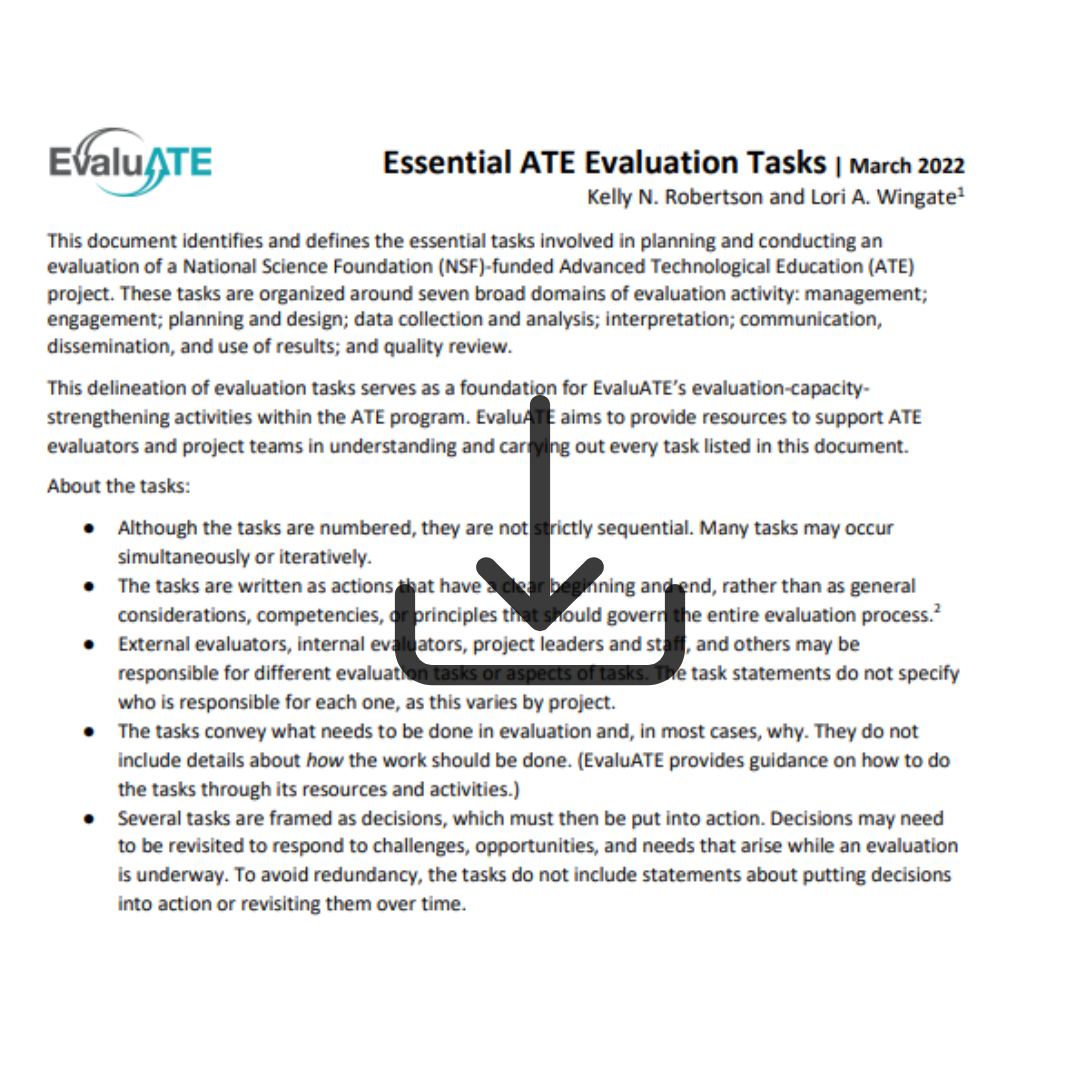
Essential ATE Evaluation Tasks

Tasks Taken On by ATE Evaluation and Project Teams

This evidence-based resource identifies and defines essential tasks involved in planning and conducting an evaluation of an NSF ATE project. This is a great place to start to understand the steps and actions that go into a high-quality ATE evaluation.

View Essential Tasks

Evaluation Essentials for Non-Evaluator

Understanding the Basics and Benefits of Evaluation

This webinar provides practical strategies for finding and selecting an evaluator for your proposal and what to do if your institution doesn’t allow the selection of an evaluator before your grant is awarded.

View Webinar

NSF ATE Evaluation

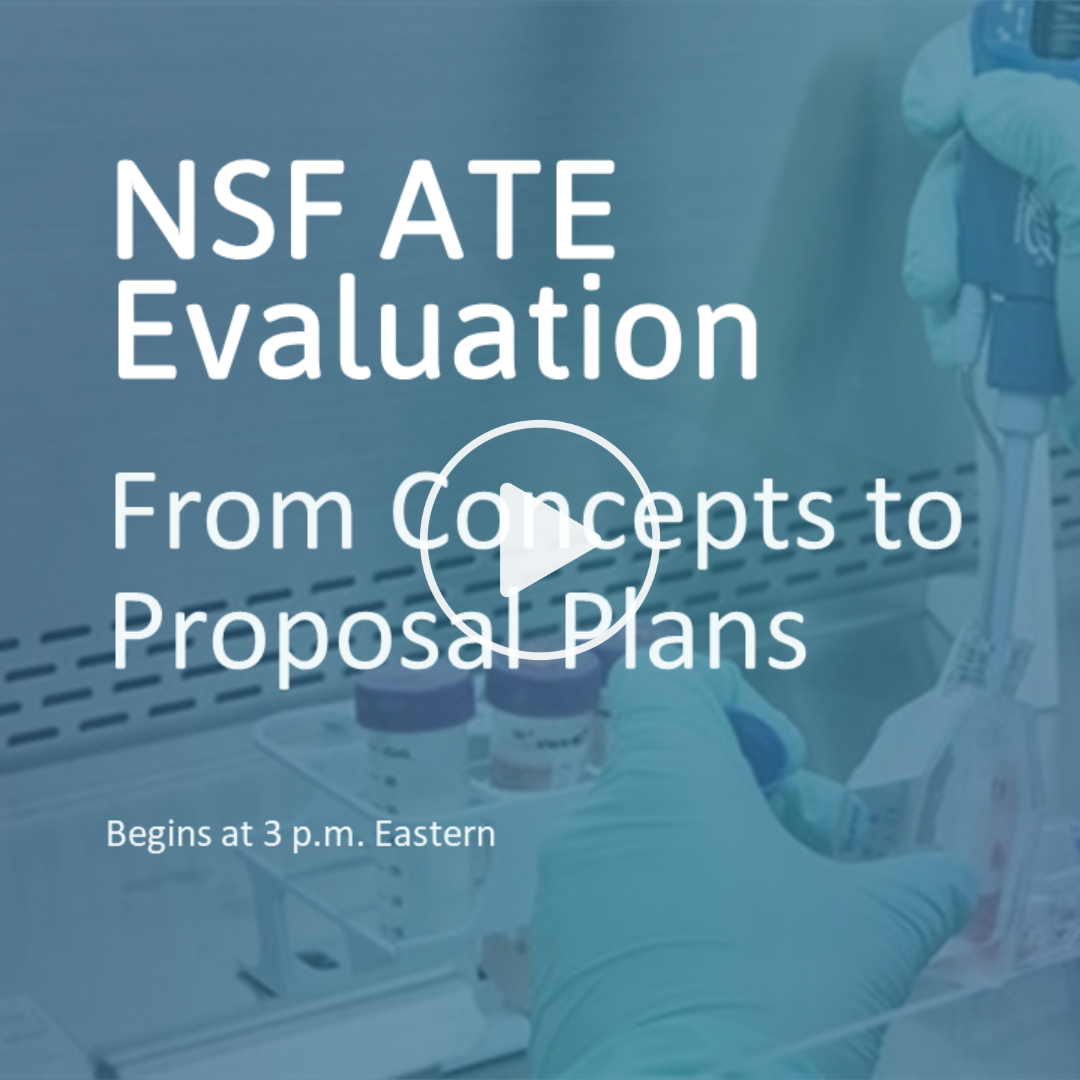
From Concepts to Proposal Plans

This webinar, designed for both non-evaluators and evaluators in the pre-award stage, introduces the basics of evaluation and provides practical guidance for developing a strong evaluation plan.

View Webinar
National Science Foundation Logo EvaluATE is supported by the National Science Foundation under grant number 2332143. Any opinions, findings, and conclusions or recommendations expressed on this site are those of the authors and do not necessarily reflect the views of the National Science Foundation.